
60-minute yin yoga sequence pdf
A 60-minute Yin Yoga practice offers profound benefits, targeting connective tissues best accessed with cold muscles, though warming up suits some students’ preferences.
What is Yin Yoga?
Yin Yoga is a slow-paced style where poses are held for longer periods – typically three to five minutes, or even longer – to target the deeper connective tissues, like ligaments, tendons, and fascia. Unlike more dynamic styles, Yin focuses on creating space in the joints and increasing circulation in these tissues.
Traditionally, Yin is practiced with cold muscles, as warmth can hinder the ability to effectively stress and stimulate these deeper layers. However, modern adaptations sometimes incorporate gentle warm-ups. The practice encourages a meditative state, fostering mindfulness and self-awareness through stillness. It’s about surrendering into gravity and allowing the body to release tension, rather than actively stretching.
Benefits of a 60-Minute Yin Practice
A 60-minute Yin Yoga session delivers a wealth of physical and mental benefits. By targeting connective tissues, it increases flexibility and joint mobility, potentially improving range of motion over time. The long holds cultivate a sense of calm, reducing stress and anxiety through mindful awareness.
Practicing Yin can also enhance energy flow (Qi) and improve circulation. Whether practiced on cold or warmed muscles, it encourages emotional release as tension is held and then surrendered. A longer practice allows for deeper exploration of poses and a more profound meditative experience, fostering a greater connection to the body and mind.
Preparing for Your Yin Yoga Session
Creating a tranquil space with props like bolsters and blankets is key; pranayama’s placement depends on the specific practice being taught.
Creating a Comfortable Space
Establishing a dedicated space for your 60-minute Yin Yoga session is paramount for a deeply restorative experience. Prioritize a quiet area, free from distractions, where you can fully surrender to the practice. The temperature should be comfortably warm, preventing chills during longer holds, but not overly heated. Soft lighting, perhaps from candles or a dimmer switch, can enhance the calming atmosphere.
Consider the flooring – a yoga mat is essential, and placing it over a rug can provide extra cushioning. Minimize potential interruptions by informing household members of your practice time. The goal is to create a sanctuary where you feel safe, supported, and able to turn your attention inward, allowing the benefits of Yin Yoga to unfold.
Props for Yin Yoga
Yin Yoga heavily utilizes props to support the body and deepen the experience of stillness. Bolsters are invaluable for comfortably supporting the spine in poses like Sphinx or Supported Bridge. Blankets can be rolled to support knees in Butterfly or used for cushioning under the hips in seated poses. Blocks offer adjustable height, assisting in reaching the floor or modifying poses for individual flexibility.
A strap can extend your reach, particularly useful in poses like Paschimottanasana (Caterpillar). Don’t hesitate to get creative – pillows, cushions, or even sturdy books can serve as effective props. The key is to use props to minimize strain and allow for complete relaxation into each pose, fostering a sense of surrender and opening within the connective tissues.
The Role of Pranayama (Breathing Exercises)
Pranayama, or conscious breathing, is a vital component of a well-rounded Yin Yoga practice, though its placement is flexible. Integrating breathwork at the beginning can calm the nervous system, preparing the body for stillness and deeper tissue release. Simple techniques like diaphragmatic breathing or equal breathing (Sama Vritti) are excellent choices.
Alternatively, pranayama can be woven throughout the sequence, encouraging students to focus on their breath as they hold poses. Concluding with a longer breathing exercise, like alternate nostril breathing (Nadi Shodhana), can balance energy and promote a sense of grounding. Ultimately, the best approach depends on the specific practice and teacher’s guidance.
60-Minute Yin Yoga Sequence Breakdown
This sequence blends warm-up movements, core Yin poses held for several minutes, and a cool-down, prioritizing connective tissue release and mindful stillness.
Warm-up (5-10 Minutes)
The initial warm-up phase, lasting 5-10 minutes, gently prepares the body for deeper Yin poses. It’s crucial to avoid excessive stretching, especially if targeting connective tissues with cold muscles – the core principle of traditional Yin.
Begin with Gentle Spinal Movements, like cat-cow stretches, to increase spinal mobility and awareness. Follow this with Joint Rotations, focusing on wrists, ankles, knees, and hips, to lubricate the joints and improve range of motion.
A standing forward fold to squat combination is a great transition, minimizing unnecessary movement between lying and standing positions. This prepares the body for floor work and encourages a gentle forward bend, easing into the practice. Remember, the warm-up isn’t about achieving flexibility, but about awakening the body.
Gentle Spinal Movements
Initiate the warm-up with gentle spinal movements to awaken the back body and cultivate intervertebral awareness. Begin on hands and knees in a tabletop position, ensuring wrists are under shoulders and knees under hips.
Transition into Cat-Cow Pose, inhaling as you drop your belly towards the floor (Cow) and exhaling as you round your spine towards the ceiling (Cat). Repeat this flowing movement for several rounds, synchronizing breath with movement.
Add gentle spinal twists, circling the hips while keeping the spine relatively stable. These movements increase spinal mobility and prepare the back for sustained holds in later poses. Focus on mindful movement and breath, avoiding any strain or discomfort.
Joint Rotations
Following spinal movements, incorporate joint rotations to lubricate and mobilize the major joints – ankles, knees, hips, wrists, elbows, and shoulders. Begin with ankle rotations, circling each foot in both directions. Progress to knee rotations, gently bending and circling the knees.
Move onto hip circles, making large, fluid movements with the hips. Then, focus on the upper body with wrist and elbow rotations, followed by shoulder rolls.
Encourage students to move slowly and mindfully, paying attention to any sensations in the joints. These rotations prepare the joints for the deeper stretches of the Yin practice, enhancing range of motion and reducing stiffness.
Core Yin Poses (40-45 Minutes)
This segment forms the heart of the 60-minute practice, focusing on long-held, passive stretches targeting deep connective tissues. Begin with Butterfly Pose (Baddha Konasana) for 5 minutes, encouraging forward folding from the hips. Follow with Caterpillar Pose (Paschimottanasana), also for 5 minutes, emphasizing a rounded spine.
Introduce Sphinx Pose (Salamba Bhujangasana) for 3 minutes, a gentle backbend. Then, move into Dragon Pose (Anjaneyasana Variation), holding each side for 5 minutes, and Shoelace Pose (Gomukhasana Variation), 5 minutes per side.
Conclude with Supported Bridge Pose (Setu Bandhasana) for 5 minutes, utilizing props for comfort and deeper release.
Butterfly Pose (Baddha Konasana) ー 5 minutes
Begin seated, bringing the soles of your feet together, allowing your knees to fall open. Gently fold forward from the hips, maintaining a straight spine as much as possible. Support yourself with blocks under your knees if needed, ensuring comfort and preventing strain.
Allow gravity to deepen the stretch in your inner thighs, groin, and lower back. Breathe deeply and consciously, noticing any sensations that arise.
With each exhale, encourage a slight release, allowing yourself to sink a little further into the pose. Hold for 5 minutes, focusing on surrendering to the stretch and cultivating a sense of calm.
Caterpillar Pose (Paschimottanasana) ⎼ 5 minutes
Start seated with your legs extended forward, feet flexed. Inhale, lengthening your spine. Exhale, gently fold forward from the hips, reaching towards your feet. Avoid rounding the back excessively; prioritize a straight spine initially.
Use a strap around your feet if reaching is challenging. Allow your head to relax towards your knees, but don’t force it. Focus on lengthening the spine with each inhale and deepening the fold with each exhale.
Hold for 5 minutes, breathing deeply into the lower back and hamstrings. Notice any sensations and allow them to be without judgment.
Sphinx Pose (Salamba Bhujangasana) ー 3 minutes
Lie on your stomach with your forearms on the floor, elbows directly under your shoulders. Gently press through your forearms to lift your chest off the ground, maintaining a slight bend in your elbows. Keep your pubic bone grounded and your shoulders relaxed away from your ears.
This pose gently opens the chest and spine. Avoid locking your elbows or overextending your lower back; Breathe deeply, feeling the expansion in your chest with each inhale.
Hold for 3 minutes, noticing the gentle backbend and allowing your breath to deepen the stretch.
Dragon Pose (Anjaneyasana Variation) ー 5 minutes (each side)
From tabletop position, step one foot forward between your hands, aligning the knee over the ankle. Lower your back knee to the floor, keeping your hips square. You can stay upright or fold forward over your front leg, supporting with your forearms or head to the floor.
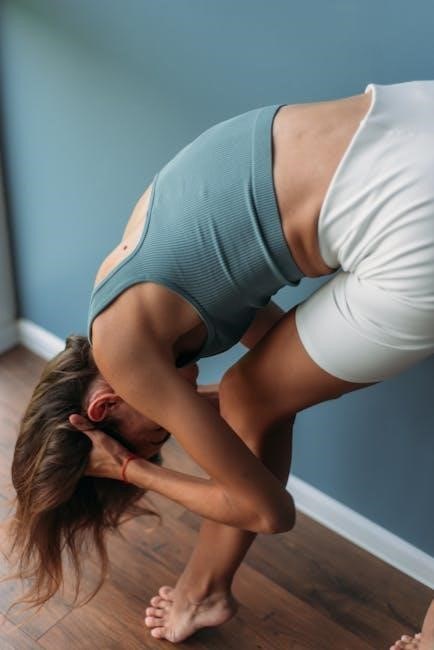
This pose deeply stretches the hip flexors and quadriceps. Focus on relaxing into the pose and breathing deeply. If you can’t reach the floor, use a block for support.
Hold for 5 minutes on each side, noticing any sensations and allowing them to soften with each exhale.
Shoelace Pose (Gomukhasana Variation) ー 5 minutes (each side)
Begin seated with knees bent, stacking one shin over the other, aiming to bring the heels close to the hips. Allow your knees to relax downwards. If this feels intense, place a block or blanket under your top knee for support. Maintain a straight spine, gently lengthening from the crown of your head.
This pose targets the hips and outer thighs. Breathe deeply, noticing any sensations. It’s common to feel a stretch in the hip of the bent leg.
Hold for 5 minutes per side, surrendering to the sensation and allowing it to deepen with each breath.
Supported Bridge Pose (Setu Bandhasana) ー 5 minutes
Lie on your back with knees bent and feet flat on the floor, hip-width apart. Lift your hips, creating a gentle backbend. Support your sacrum (the triangular bone at the base of your spine) with a block – choose a height that feels comfortable and allows for a gentle opening.
Arms can rest alongside your body, palms down or up. This pose gently opens the chest and stretches the front of the body.
Hold for 5 minutes, focusing on deep, even breaths. Allow your body to fully relax into the support of the block, releasing tension in the lower back.
Cool-down & Relaxation (5-10 Minutes)
Transitioning from deeper poses, begin with a gentle Supine Twist. Lying on your back, draw your knees into your chest, then gently drop them to one side, extending your arms out to the sides. Hold for 2-3 minutes on each side, allowing a gentle spinal twist and release.
Finally, move into Savasana (Corpse Pose). Lie flat on your back, arms relaxed by your sides, palms facing up. Close your eyes and allow your body to completely surrender to the floor.
Focus on your breath, letting go of any remaining tension. Remain in Savasana for at least 5 minutes, absorbing the benefits of your practice.
Supine Twist
Lying comfortably on your back, draw both knees towards your chest, keeping your shoulders grounded. Extend your arms out to the sides, forming a ‘T’ shape. Gently guide your knees over to one side, keeping both shoulders flat on the floor – use a blanket under your knees if needed.
Turn your head to gaze in the opposite direction of your knees, deepening the twist. Breathe deeply into the stretch, feeling a gentle release along your spine. Hold for 2-3 minutes, focusing on softening any tension.
Repeat on the other side, ensuring equal time and attention to both sides of the body.
Savasana (Corpse Pose)
Lie flat on your back, legs extended and arms resting comfortably by your sides, palms facing upwards. Allow your feet to fall open naturally. Close your eyes gently and release any remaining tension in your body.
Focus on your breath, noticing the natural rise and fall of your abdomen. Let go of any thoughts or worries, simply observing them without judgment. Allow yourself to sink deeper into the floor with each exhale;
Remain in Savasana for at least 5-10 minutes, fully surrendering to the present moment and absorbing the benefits of your practice.
Timing Considerations: Warm Muscles vs. Cold Muscles
Yin yoga effectively targets connective tissues when muscles are cold, but warming up can be beneficial for students prioritizing stretching sensations.
Yin Yoga and Connective Tissue
Yin Yoga uniquely focuses on stimulating and stressing connective tissues – tendons, ligaments, and fascia – rather than primarily targeting muscular engagement. This is most effectively achieved when muscles are cold, as warmth and elasticity can hinder the desired effect of accessing these deeper layers. When muscles are relaxed and not actively engaged, a gentle, sustained pressure can encourage hydration and pliability within the connective tissues.
The intention isn’t simply to stretch, but to create a therapeutic pressure that encourages the tissues to lengthen and release over time. Many experienced practitioners and teachers, like Bernie Clark, emphasize this distinction, noting that certain poses lose their effectiveness when approached with warm muscles. Understanding this principle is crucial for delivering a truly authentic Yin Yoga experience.
Adapting the Sequence to Student Needs
Recognizing that students arrive with varying levels of experience and physical conditions is paramount. A rigid adherence to a 60-minute sequence should be tempered with mindful observation and adjustments. Some may benefit from a gentle warm-up before deeper Yin poses, while others, seeking the traditional approach, may prefer starting with cold muscles.
Offer modifications for poses, utilizing props to support students in finding comfortable expressions. Be attentive to cues of discomfort and encourage self-awareness. Acknowledge that not all students will resonate with the intention of targeting connective tissue; some may simply desire a relaxing stretch. Prioritize individual needs and create a safe, inclusive space for exploration.
Resources for Further Learning
Bernie Clark’s Yin Yoga practices and Yoga International’s series provide invaluable insights into the philosophy and nuanced application of this restorative practice.
Bernie Clark’s Yin Yoga Practices
Bernie Clark is a highly respected figure in the Yin Yoga world, renowned for his deep understanding of the practice and its anatomical foundations. He offers a wealth of resources for both practitioners and teachers, emphasizing the importance of targeting connective tissues – a goal more readily achieved with cold muscles, according to his teachings.
His 8-session series on Yoga International, specifically “Yin Yoga for Your Body,” is particularly noteworthy. Many students find this series incredibly insightful, learning a great deal about the principles and subtleties of Yin Yoga through his detailed guidance. Clark’s approach encourages a mindful exploration of the body, fostering a deeper connection to one’s internal landscape. He provides a framework for understanding how to safely and effectively access the deeper layers of fascia, promoting long-term flexibility and well-being.
Yoga International’s Yin Yoga Series
Yoga International provides a comprehensive platform for exploring various yoga styles, and their Yin Yoga series is a standout resource. Notably, they host Bernie Clark’s acclaimed “Yin Yoga for Your Body” series, an 8-session program lauded for its depth and clarity. This series delves into the nuances of Yin, emphasizing the benefits of working with cold muscles to effectively target connective tissues.
Beyond Clark’s series, Yoga International offers a diverse range of Yin classes led by experienced instructors. These classes cater to different levels, from beginners to advanced practitioners, and often incorporate variations to suit individual needs. The platform’s accessibility and variety make it an excellent choice for those seeking to deepen their understanding and practice of Yin Yoga, offering a structured path for learning and growth.
Leave a Reply
You must be logged in to post a comment.